
No results were found for the filter!
NEW
 pT365/pS371/pT377-GPR88 (phospho-GPR88 Antibody)
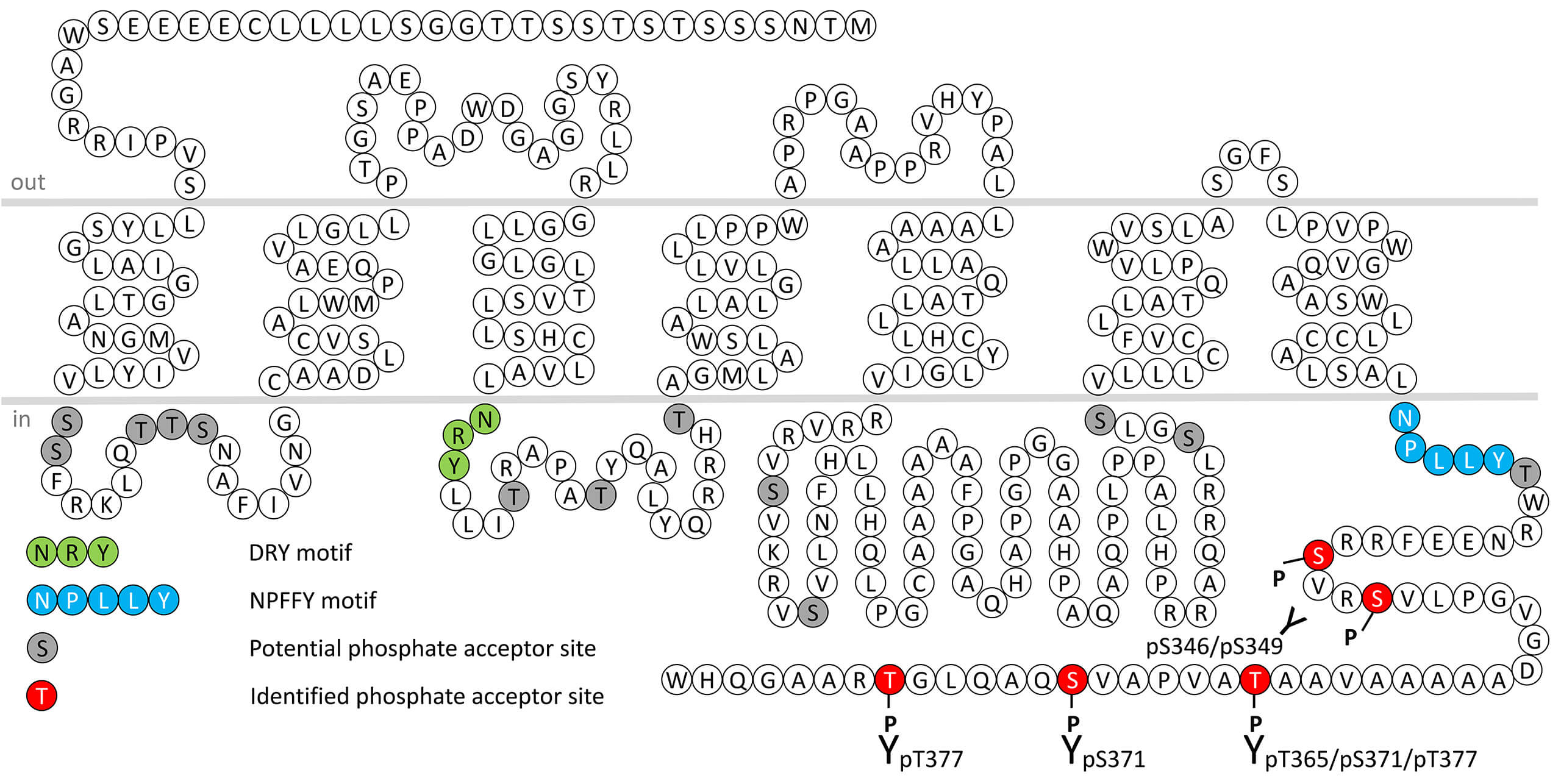
 Threonine365/Serine371/Threonine377 (T365/S371/T377) is a major phosphorylation site of the human GPR88 receptor. The pT365/pS371/pT377-GPR88 antibody detects phosphorylation in response to high-efficacy agonists. T365/S371/T377...
£ 335.00 *
NEW
 GPR88 (non-phospho), G protein-coupled...
 The non-phospho-GPR88 receptor antibody is directed against the distal end of the carboxyl-terminal tail of human GPR88. It can be used to detect total GPR88 receptors in Western blots independent of phosphorylation. The GPR88 antibody...
£ 335.00 *
NEW
 pS346/pS349-GPR88 (phospho-GPR88 Antibody)
 Serine346/Serine349 (S346/S349) is a major phosphorylation site of the human GPR88 receptor. The pS346/pS349-GPR88 antibody detects phosphorylation in response to high-efficacy agonists. S346/S349 phosphorylation is a key regulator of...
£ 335.00 *
NEW
 pS371-GPR88 (phospho-GPR88 Antibody)
 Serine371 (S371) is a major phosphorylation site of the human GPR88 receptor. The pS371-GPR88 antibody detects phosphorylation in response to high-efficacy agonists. S371 phosphorylation is a key regulator of human GPR88 desensitization,...
£ 335.00 *
NEW
 pT377-GPR88 (phospho-GPR88 Antibody)
 Threonine377 (T377) is a major phosphorylation site of the human GPR88 receptor. The pT377-GPR88 antibody detects phosphorylation in response to high-efficacy agonists. T377 phosphorylation is a key regulator of human GPR88...
£ 335.00 *
 GPR88 (G Protein-Coupled Receptor 88) is an orphan GPCR with no confirmed endogenous ligand, but it is known to play a key role in modulating neurotransmission and behavioral regulation. It primarily signals through Gi/o proteins, inhibiting intracellular cAMP production. GPR88 is highly and selectively expressed in the central nervous system, particularly in the striatum, nucleus accumbens, and cortex—regions involved in motor control, reward processing, and emotional regulation. GPR88 is considered a promising pharmacological target for neuropsychiatric and neurological disorders, including schizophrenia, Parkinson’s disease, addiction, and depression. Preclinical studies show that modulating GPR88 activity can influence dopaminergic and glutamatergic signaling. For more information on GPR88 pharmacology please refer to the
 Recently viewed