

No results were found for the filter!
NEW
 pT323/pS324/pS325-LPA2...
Threonine323/Serine324/Serine325 (T323/S324/325) is major phosphorylation site of the Lysophosphatidic Acid Receptor 2 (LPA2). pT323/pS324/pS325-LPA2 antibody detects phosphorylation in response to agonists. T323/S324/325 phosphorylation...
£ 335.00 *
NEW
 pS331/pT332-LPA2 (phospho-Lysophosphatidic Acid...
Serine331/Threonine332 (S331/T332) is major phosphorylation site of the Lysophosphatidic Acid Receptor 2 (LPA2). pS331/pT332-LPA2 antibody detects phosphorylation in response to agonists. S331/T332 phosphorylation is likely to be...
£ 335.00 *
NEW
 LPA2 (non-phospho), Lysophosphatidic Acid...
The non-phospho-LPA2 receptor antibody is directed against the distal end of the carboxyl-terminal tail of human LPA2. It can be used to detect total LPA2 receptors in Western blots independent of phosphorylation. The LPA2 antibody can...
£ 335.00 *
NEW
 LPA2 (IHC-Grade), Lysophosphatidic Acid...
The non-phospho-LPA2 receptor antibody is directed against the distal end of the carboxyl-terminal tail of human LPA2. It can be used to detect total LPA2 receptors in Western blots independent of phosphorylation. The LPA2 antibody can...
£ 335.00 *
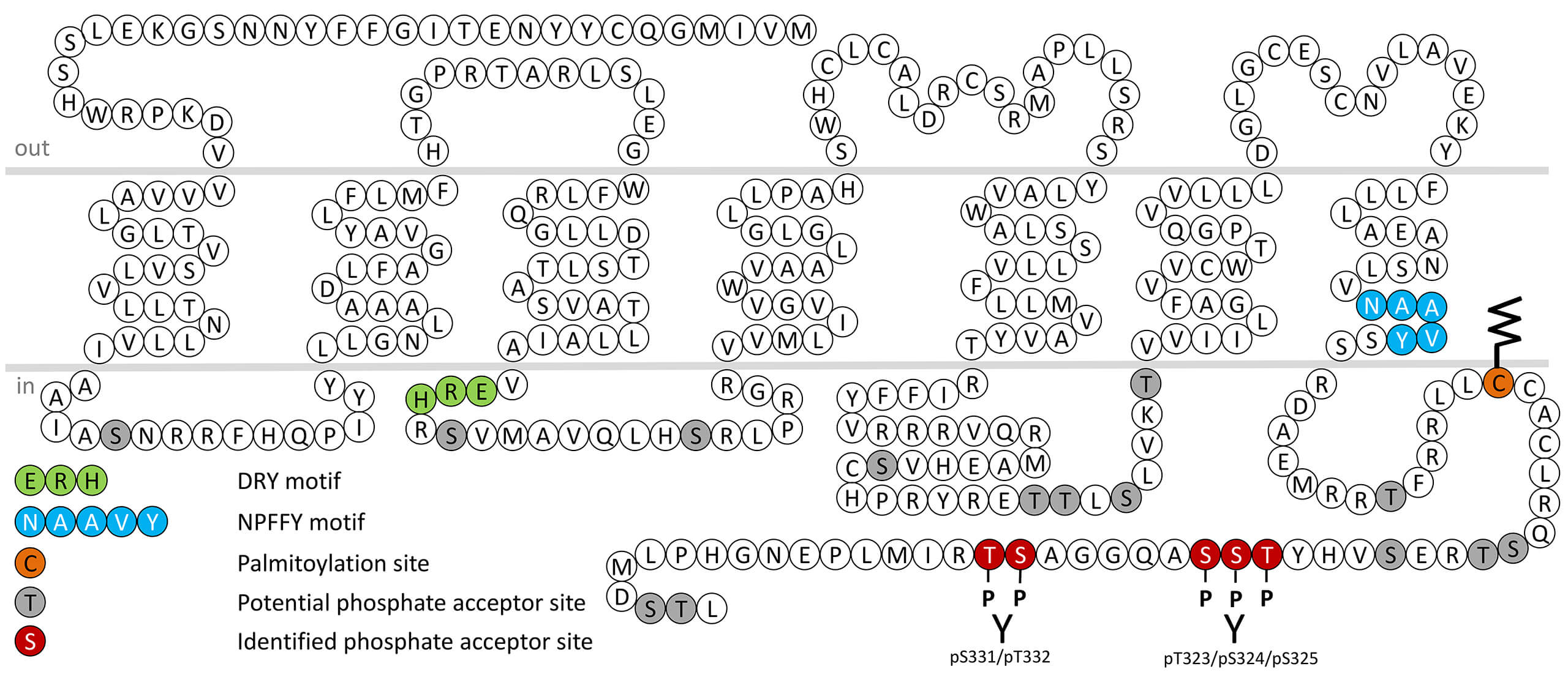 The lysophosphatidic acid receptor 2 (LPA₂), encoded by the LPAR2 gene, is a class A G protein–coupled receptor (GPCR) that binds the bioactive lipid lysophosphatidic acid (LPA). LPA₂ couples primarily to Gi/o, Gq/11, and G12/13 proteins, activating downstream signaling pathways including RhoA, PLC, MAPK/ERK, and PI3K/Akt, which regulate cell proliferation, migration, survival, and cytoskeletal organization. LPA₂ is widely expressed in epithelial tissues, immune cells, fibroblasts, and the nervous system, with notable roles in intestinal epithelium, lung, and reproductive organs. Functionally, LPA₂ is implicated in tissue repair, wound healing, and epithelial barrier maintenance, and also modulates immune cell trafficking and inflammatory responses. In disease contexts, LPA₂ signaling contributes to fibrosis, cancer progression, and inflammatory disorders, where it can enhance cell survival, proliferation, and motility. Pharmacologically, selective LPA₂ agonists and antagonists have been explored in preclinical models to modulate fibrotic and inflammatory responses, although clinical translation remains limited. LPA₂ can also interact with PDZ domain-containing proteins, adding specificity to its signaling and subcellular localization. Overall, LPA₂ functions as a critical lipid-sensing receptor that coordinates cellular responses to stress, injury, and inflammation, and represents a potential therapeutic target in fibrotic, inflammatory, and neoplastic diseases. For more information on LPA2 pharmacology please refer to the
Recently viewed