Premium Phosphosite-Specific 7TM Antibodies
Your Resource for GPCR Research
Select Your Country of Delivery below

CXC Chemokine Receptor 1 Antibodies
Close filters
No results were found for the filter!
NEW
pS347/pS348-CXCR1 (phospho-CXC Chemokine Receptor 1 Antibody)
pS347/pS348-CXCR1 (phospho-CXC Chemokine...
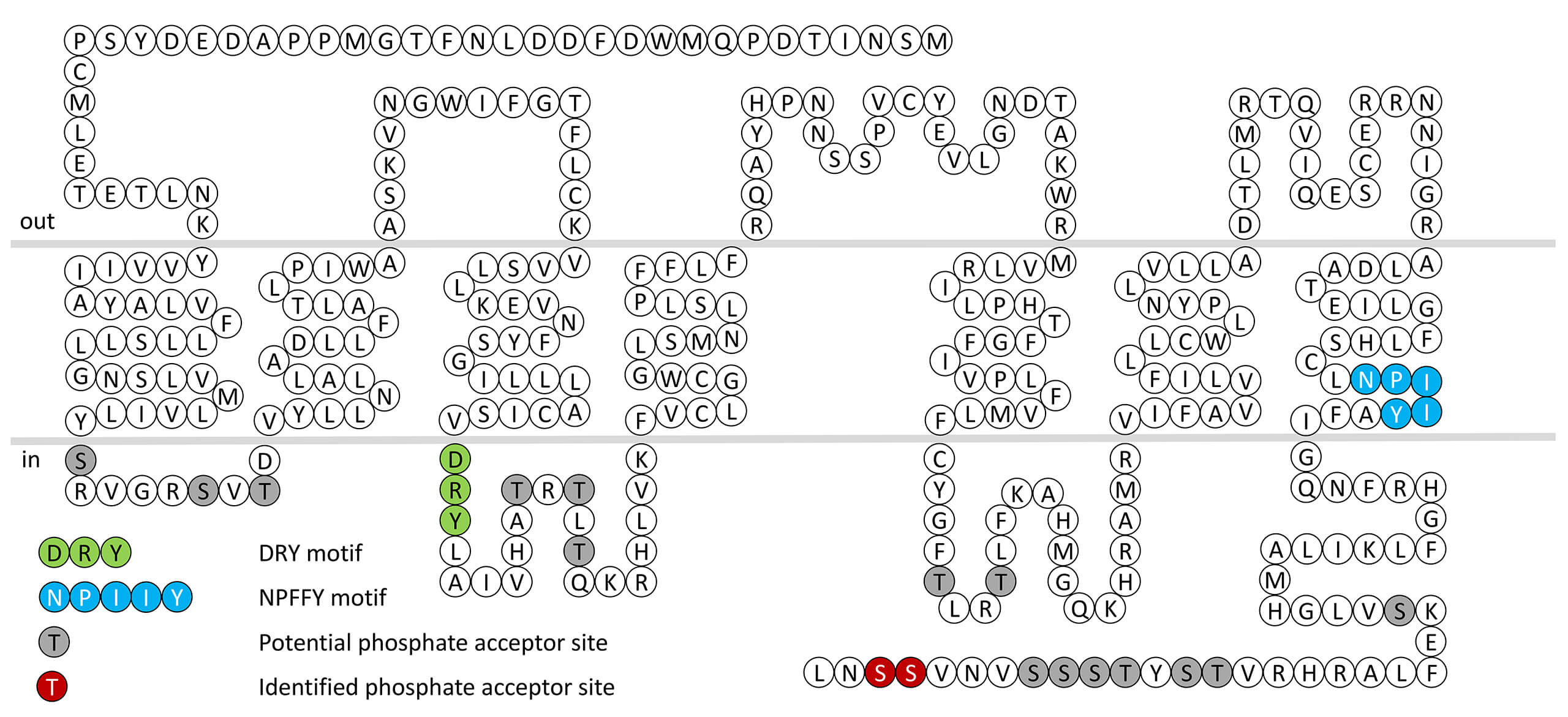
Serine347/Serine348 (S347/S348) is a major phosphorylation site of the CXCR1 receptor. The pS347/pS348-CXCR1 antibody detects phosphorylation in response to high-efficacy agonists.
£ 335.00 *

C-X-C chemokine receptor 1 (CXCR1), encoded by CXCR1, is a class A G protein-coupled receptor activated primarily by CXCL8 (interleukin-8) and also by CXCL6. It couples predominantly to Gi/o, activating pathways that regulate intracellular calcium mobilization, cell adhesion, and chemotaxis. CXCR1 is highly expressed on neutrophils and is also found on other immune cell populations and some tumor cells. In neutrophils, receptor activation promotes migration, degranulation, and reactive oxygen species production, supporting antimicrobial defense. Excessive CXCR1 signaling can contribute to inflammatory tissue injury. Agonist exposure induces receptor phosphorylation, β-arrestin recruitment, and internalization, with subsequent recycling helping restore chemokine responsiveness. The allosteric inhibitors reparixin and ladarixin, which inhibit CXCR1 and CXCR2, have undergone clinical testing in inflammatory diseases and other indications. No CXCR1-selective drug is currently approved for therapeutic use. For more information on CXCR1 pharmacology please refer to the IUPHAR database. For further reading refer to:

Bachelerie F, Ben-Baruch A, Burkhardt AM, Combadiere C, Farber JM, Graham GJ, Horuk R, Sparre-Ulrich AH, Locati M, Luster AD, Mantovani A, Matsushima K, Murphy PM, Nibbs R, Nomiyama H, Power CA, Proudfoot AE, Rosenkilde MM, Rot A, Sozzani S, Thelen M, Yoshie O, Zlotnik A. International Union of Basic and Clinical Pharmacology. LXXXIX. Update on the extended family of chemokine receptors and introducing a new nomenclature for atypical chemokine receptors. Pharmacol Rev. 2013 Nov 11;66(1):1-79. doi: 10.1124/pr.113.007724. Print 2014. Review. Erratum in: Pharmacol Rev. 2014 Apr;66(2):467. PubMed PMID: 24218476; PubMed Central PMCID: PMC3880466.

C-X-C chemokine receptor 1 (CXCR1), encoded by CXCR1 , is a class A G protein-coupled receptor activated primarily by CXCL8 (interleukin-8) and also by CXCL6. It couples predominantly to... read more »
Close window
CXC Chemokine Receptor 1 Antibodies

C-X-C chemokine receptor 1 (CXCR1), encoded by CXCR1, is a class A G protein-coupled receptor activated primarily by CXCL8 (interleukin-8) and also by CXCL6. It couples predominantly to Gi/o, activating pathways that regulate intracellular calcium mobilization, cell adhesion, and chemotaxis. CXCR1 is highly expressed on neutrophils and is also found on other immune cell populations and some tumor cells. In neutrophils, receptor activation promotes migration, degranulation, and reactive oxygen species production, supporting antimicrobial defense. Excessive CXCR1 signaling can contribute to inflammatory tissue injury. Agonist exposure induces receptor phosphorylation, β-arrestin recruitment, and internalization, with subsequent recycling helping restore chemokine responsiveness. The allosteric inhibitors reparixin and ladarixin, which inhibit CXCR1 and CXCR2, have undergone clinical testing in inflammatory diseases and other indications. No CXCR1-selective drug is currently approved for therapeutic use. For more information on CXCR1 pharmacology please refer to the IUPHAR database. For further reading refer to:

Bachelerie F, Ben-Baruch A, Burkhardt AM, Combadiere C, Farber JM, Graham GJ, Horuk R, Sparre-Ulrich AH, Locati M, Luster AD, Mantovani A, Matsushima K, Murphy PM, Nibbs R, Nomiyama H, Power CA, Proudfoot AE, Rosenkilde MM, Rot A, Sozzani S, Thelen M, Yoshie O, Zlotnik A. International Union of Basic and Clinical Pharmacology. LXXXIX. Update on the extended family of chemokine receptors and introducing a new nomenclature for atypical chemokine receptors. Pharmacol Rev. 2013 Nov 11;66(1):1-79. doi: 10.1124/pr.113.007724. Print 2014. Review. Erratum in: Pharmacol Rev. 2014 Apr;66(2):467. PubMed PMID: 24218476; PubMed Central PMCID: PMC3880466.

Recently viewed